YOU OWN THE RELATIONSHIP. WE OWN THE CARE BETWEEN visits

Between Visits,

Outcomes Are Decided.

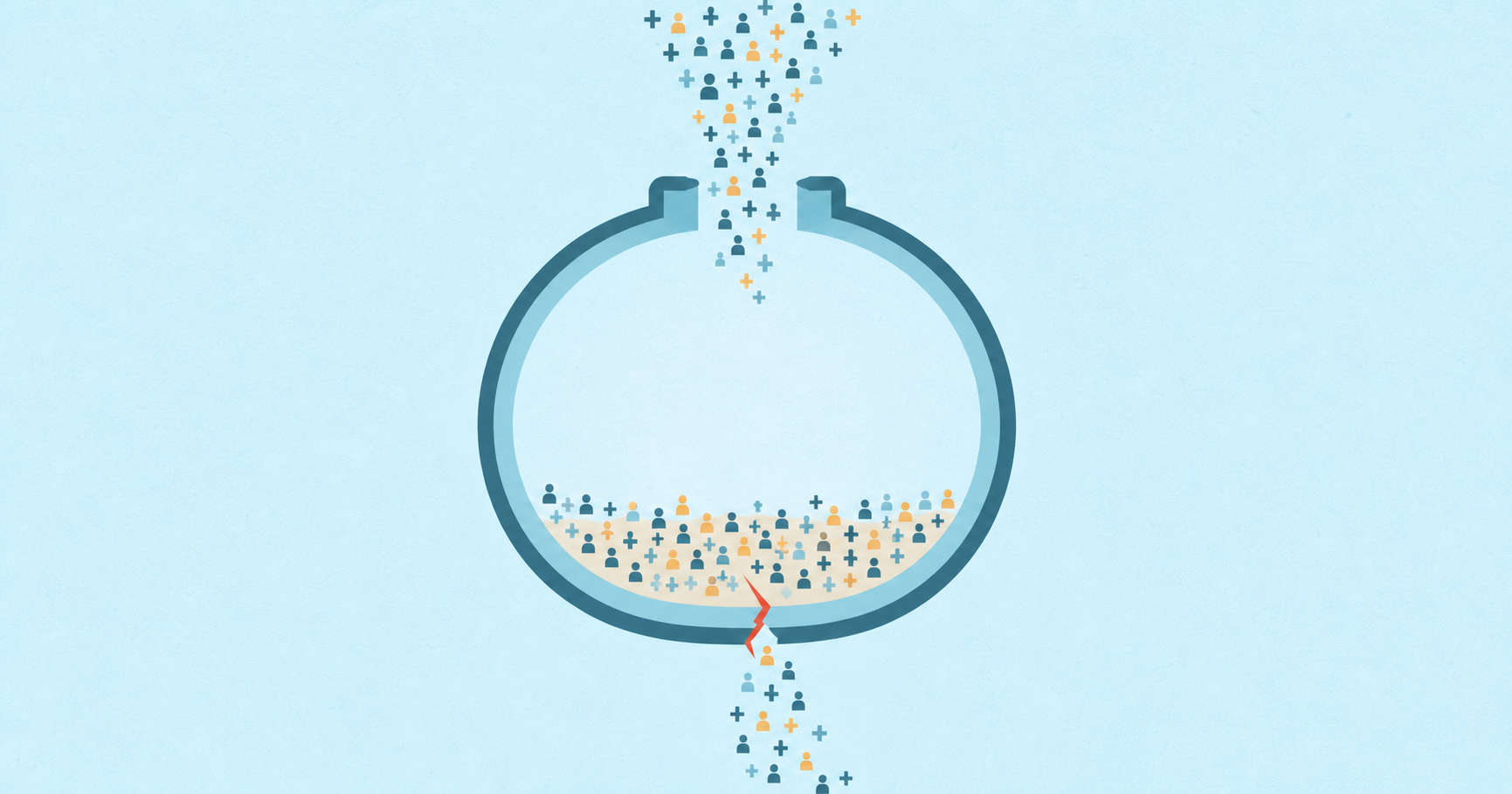
Your patients don't stop being sick between appointments. What happens between visits is what's driving your quality scores, your readmissions, and whether your sickest patients get the care they need.
Health systems · ACOs · Medical groups · 95+ patient NPS
Happening right now
    No new workflow
    Your EHR, untouched.
    No new budget
    Funds itself through reimbursement.
    Almost none of your physicians' time
    Everything teed up. They stay in oversight.
    Paid only when it works
    The risk is ours.

    What Welby is

    We run the care that happens between visits

    You own the relationship with your patient. We're the clinical team and the system that keeps their care running after they leave the office, so the people who need attention actually get it.

    1 What we are

    The clinical operating layer for physician practices. Your patients go home and we keep running their care, on your systems and under your name.

    2 Who we help

    Practices, medical groups, and health systems that own the patient relationship but can't be everywhere between visits. You keep the patient. We cover the gap.

    3 Why we do it

    Patients don't stop being sick between appointments. That's where the readmissions and the quality misses come from. Someone has to be watching, and usually no one is.

    4 What it looks like

    You hand us the patients who need eyes between visits. Our clinicians watch their numbers every day, reach out when something moves, work it through, and put it all back in the chart. Your team hears from us only when it needs to.

    The patient journey

    One path. Every patient.

    This is the care between visits, from the day we find a patient to the outcomes we report back. The same journey runs for everyone you send us.

    Clinical rigor

    One framework. Every patient.

    Before we build a care plan, every patient is scored against the same universal acuity framework, so the intensity of care matches the actual risk. Here's how it works, and you can test it yourself.

    Low acuity
    Stable, at or near goal
    • No hospitalizations in 12 months
    • Simple, stable medication regimen
    APCM or CCM (+/- RPM)
    15–30 min / month
    Moderate acuity
    Suboptimal control, intermittent symptoms
    • 0–1 hospitalizations in 12 months
    • Multiple agents, recent titration
    CCM + RPM
    40–60 min / month
    High acuity
    Poorly controlled, frequent symptoms or crises
    • 2+ hospitalizations in 6–12 months
    • Complex, frequent medication changes
    CCM + RPM (intensive RN)
    60+ min / month
    Try it yourself

    Classify a patient

    Vitals vs. goal
    Chronic conditions
    Hospitalizations (12 mo)
    Medication complexity
    LowModerateHigh
    Low acuity APCM or CCM (+/- RPM) · 15–30 min / month Score: 15

    The part your CFO won’t believe

    If it doesn’t pay for itself, you don’t pay

    We take the risk on codes. In value-based arrangements, we take risk on outcomes. No platform license, no sunk cost, no bet you have to carry on faith.

    This is a contract term, not a marketing line. Hold us to it.

    From our standard contract

    Clause 3b · Invoicing & Payment Method

    “In no event shall Welby charge or collect fees in excess of amounts actually collected by Customer for the Services during the applicable billing period.”

    In plain terms

    We can only bill you out of what the payer actually pays you. Not a dollar more.

    Why we're different

    Put us head-to-head with anyone.

    Same categories. A different model. Here's the honest comparison.
    Workflow & EMR
    Customized to your practice, built inside your EMR.
    We map to your protocols and your athenahealth or eClinicalWorks setup. Your team keeps working where they already work.
    The market standard
    A separate portal login, one workflow for everyone.
    Your staff toggles into another system and bends to their process, not the reverse.
    Clinical model
    Care runs on Welby Care Pathways.
    Evidence-based protocols, standardized where safety demands it and tailored to your standard of care everywhere else.
    The market standard
    Generic workflows, applied to every client.
    The guideline basis is rarely published, so you can't see what's driving decisions.
    Financial model
    We take the risk. If it doesn't pay for itself, you don't pay.
    The program is funded by the reimbursement it generates. We only get paid when it works.
    The market standard
    Per-member fees plus an implementation fee.
    You carry the cost up front and the risk if enrollment or results fall short.
    Branding
    Your brand on every patient touchpoint.
    Patients experience your practice. We stay invisible behind your name.
    The market standard
    The vendor's brand fronts your patients.
    Your patients build the relationship with someone else.
    Clinical team
    Licensed RNs and nurse practitioners.
    A dedicated clinical team accountable to your standard of care, with real continuity.
    The market standard
    Staffing and licensure vary.
    Often lower-cost or non-clinical staff, with turnover between calls.
    Compliance
    Every patient touch documented to the timestamp.
    A full audit trail lands in your chart, ready for review whenever you need it.
    The market standard
    Documentation depth and transparency vary.
    You may not see exactly what happened between visits, or when.
    The proof

    We put real numbers on the care between visits.

    The metrics marked Welby are from our live programs, not a pilot deck. Alongside them, the published evidence the model is built on.

    We publish our own dollar results only when claims data proves them, not before. That restraint is the point.

    Welby · live program
    26%
    reduction in A1c within 90 days
    Welby program data
    Medicare data
    $72 PMPM
    lower Medicare spend for CCM patients
    Mathematica / CMS evaluation
    Welby · live program
    97 days
    to sustained systolic blood pressure under 140
    Welby program data
    Welby · active programs
    95+
    patient NPS across active programs
    Welby program data
    Published research
    48%
    fewer ED visits and hospitalizations with remote monitoring
    JMIR, 2025 (older adults, multiple conditions)
    Welby · active programs
    30–50%
    patient enrollment in target populations
    Welby program data
    Welby · directional
    Fewer
    ED visits, admissions, and readmissions
    Dollar impact reported once claims data proves it
    From our founder

    Why I started Welby

    I spent years inside the big payers, Blue Cross, Aetna, and CVS. The whole system is built around the short office visit and almost nothing for what happens after the patient goes home.

    That gap isn't abstract for me. This past year I watched my mom go through cancer, and my dad, about as capable and dedicated as they come, could still barely keep up with her medications and the coordination between every appointment. If it was that hard for our family, I know what it looks like for the ones without someone like him.

    The space between visits is where outcomes get decided, and it's the part nobody is built to own. So we built Welby to own it.

    Seth Merritt
    Founder and CEO, Welby
    Reviews

    What people are saying

    Your next five hires

    Your quality scores don't have a strategy problem. They have a capacity problem.

    Here are five care managers to fix it. They're ours, not new headcount. We deploy them on your population in about 30 days, and the care they run between visits funds itself through reimbursement. If it doesn't pay for itself, you don't pay. How is that even possible? That's the conversation.

    Build my deployment plan
    What five care managers do in a month
    600
    Annual wellness visits completed
    1,500
    Post-discharge patients contacted
    1,250
    Colorectal screening outreach (FIT)
    1,800
    Chronic-care check-ins
    600
    Annual wellness visits completed
    1,500
    Post-discharge patients contacted
    1,250
    Colorectal screening outreach (FIT)
    1,800
    Chronic-care check-ins
    Illustrative monthly capacity for a team of five, shown per activity. The real mix is built to your priorities.
    Our blog
    A piece went around last week with a headline most hospital executives would never say out loud. Stop saying there's a nursing shortage. TIME ran it on July 30, and RegisteredNursing.org built a whole 2026 analysis around the same data the next day. Here's the number that should stop you cold. More than 280,000 people passed the NCLEX in 2025, up about 34 percent from 2016. Around 7 million nurses
    August 4, 2026

    There Is No Nursing Shortage. There's an Exodus, and Hospitals Built It.

    A piece went around last week with a headline most hospital executives would never say out loud. Stop saying there's a nursing shortage. TIME ran it on July 30, and RegisteredNursing.org built a whole 2026 analysis around the same data the next day. Here's the number that should stop you cold. More than 280,000 people passed the NCLEX in 2025, up about 34 percent from 2016. Around 7 million nurses
    On July 8 a study went around that most health system leaders scrolled past. A randomized trial, published in Nature Medicine, tested a generative AI tool built to help clinicians in primary care. The AI improved the documentation. It pushed clinicians toward more guideline-concordant care. And it did nothing measurable for the patients. Treatment failure ran about 2 percent in the control group a
    July 29, 2026

    Your AI wrote a beautiful note. The patient is right where you left him.

    On July 8 a study went around that most health system leaders scrolled past. A randomized trial, published in Nature Medicine, tested a generative AI tool built to help clinicians in primary care. The AI improved the documentation. It pushed clinicians toward more guideline-concordant care. And it did nothing measurable for the patients. Treatment failure ran about 2 percent in the control group a
    On July 15 the House Ways and Means Committee voted, unanimously, to make Medicare Advantage plans hand over a full list of everything they subject to prior authorization and report their denial data. CMS already forced the plans to decide expedited requests in 72 hours and standard ones in seven days starting this year. Plans now have to honor an approval once they give it, and they have to post
    July 22, 2026

    The payers just drew you a map. Most of you are reading it upside down.

    On July 15 the House Ways and Means Committee voted, unanimously, to make Medicare Advantage plans hand over a full list of everything they subject to prior authorization and report their denial data. CMS already forced the plans to decide expedited requests in 72 hours and standard ones in seven days starting this year. Plans now have to honor an approval once they give it, and they have to post
    There's a study out in JAMA Network Open that should stop a lot of people mid-sentence. Researchers looked at roughly 16,000 Medicare fee-for-service patients, about 4,200 of them treated through hospital-at-home and the rest admitted the normal way. The hospital-at-home group did better on the things you'd hope. In-hospital mortality was 0.4% versus 3.6%. ED visits ran 8.8% versus 10%. ICU escala
    July 16, 2026

    You moved the hospital into the house. Readmissions still didn't move.

    There's a study out in JAMA Network Open that should stop a lot of people mid-sentence. Researchers looked at roughly 16,000 Medicare fee-for-service patients, about 4,200 of them treated through hospital-at-home and the rest admitted the normal way. The hospital-at-home group did better on the things you'd hope. In-hospital mortality was 0.4% versus 3.6%. ED visits ran 8.8% versus 10%. ICU escala
    On July 2, CMS dropped the CY 2027 outpatient payment proposed rule. It's a fat, sleepy document that most people will skim and forget. Buried in it is one line that should make every health system CFO put down their coffee. CMS wants to keep expanding site-neutral payment, and this year it goes after imaging without contrast done in hospital-owned outpatient departments. Same scan, same machine,
    July 8, 2026

    Medicare Just Admitted You've Been Paying for the Building, Not the Care

    On July 2, CMS dropped the CY 2027 outpatient payment proposed rule. It's a fat, sleepy document that most people will skim and forget. Buried in it is one line that should make every health system CFO put down their coffee. CMS wants to keep expanding site-neutral payment, and this year it goes after imaging without contrast done in hospital-owned outpatient departments. Same scan, same machine,
    CMS put out its 2026 participation numbers and the value-based crowd took a victory lap. 511 ACOs in the Medicare Shared Savings Program now. 12.6 million people in traditional Medicare attributed to them. The largest the program has ever been, up from 476 ACOs the year before. Add the most recent reconciled results on top of it, where ACOs earned around $4.1 billion in shared savings and saved Me
    June 23, 2026

    Record Numbers Joined an ACO This Year. Most of Them Will Change Nothing About Care.

    CMS put out its 2026 participation numbers and the value-based crowd took a victory lap. 511 ACOs in the Medicare Shared Savings Program now. 12.6 million people in traditional Medicare attributed to them. The largest the program has ever been, up from 476 ACOs the year before. Add the most recent reconciled results on top of it, where ACOs earned around $4.1 billion in shared savings and saved Me
    Becker's ran a snapshot this week. Around 50 US health systems are now running clinical AI at enterprise scale. CommonSpirit alone reportedly sits on something like 250 active AI tools across its hospitals and claims north of $100 million in annual value. Big numbers. Big press releases. Every system wants to be on the list, and most of the people on those panels sound like they already won.
    June 17, 2026

    Everybody Bought Clinical AI. Almost Nobody Uses It. The Money Is in the Wrong Room.

    Becker's ran a snapshot this week. Around 50 US health systems are now running clinical AI at enterprise scale. CommonSpirit alone reportedly sits on something like 250 active AI tools across its hospitals and claims north of $100 million in annual value. Big numbers. Big press releases. Every system wants to be on the list, and most of the people on those panels sound like they already won.
    Then start moving work down a level and out of the building, deliberately, one pathway at a time. You'll keep more nurses than any retention bonus will ever buy you.The systems that win the next five years won't be the ones who recruited hardest. They'll be the ones who figured out their best nurses were never the constraint. The way they used them was.‍
    June 10, 2026

    You Don't Have a Nursing Shortage. You Have a Misallocation Problem.

    Then start moving work down a level and out of the building, deliberately, one pathway at a time. You'll keep more nurses than any retention bonus will ever buy you.The systems that win the next five years won't be the ones who recruited hardest. They'll be the ones who figured out their best nurses were never the constraint. The way they used them was.‍
    Twenty-one health systems have terminated Medicare Advantage contracts so far in 2026. Mayo Clinic, Mount Sinai, UNC Health, Memorial Hermann, BayCare, Providence. NewYork-Presbyterian and UnitedHealthcare went out of network on May 1 with no new agreement in place. About 2.9 million MA enrollees, roughly one in ten, are being forced into a new plan this year because their insurer pulled out
    June 2, 2026

    Walking Away From Medicare Advantage Isn't Strategy. It's a Confession.

    Twenty-one health systems have terminated Medicare Advantage contracts so far in 2026. Mayo Clinic, Mount Sinai, UNC Health, Memorial Hermann, BayCare, Providence. NewYork-Presbyterian and UnitedHealthcare went out of network on May 1 with no new agreement in place. About 2.9 million MA enrollees, roughly one in ten, are being forced into a new plan this year because their insurer pulled out
    The U.S. is short roughly 250,000 nurses and 85,000 physicians, with nearly two thirds of nurses operating at high burnout and a projected 70,000 primary care physician shortfall by 2038. Most health systems are responding by deploying AI on top of broken workflows, which makes burnout more efficient rather than expanding capacity.
    May 22, 2026

    The Real Chronic Care Bottleneck Is Not Technology. It Is People. Most C-Suites Are Solving the Wrong Problem.

    The U.S. is short roughly 250,000 nurses and 85,000 physicians, with nearly two thirds of nurses operating at high burnout and a projected 70,000 primary care physician shortfall by 2038. Most health systems are responding by deploying AI on top of broken workflows, which makes burnout more efficient rather than expanding capacity.
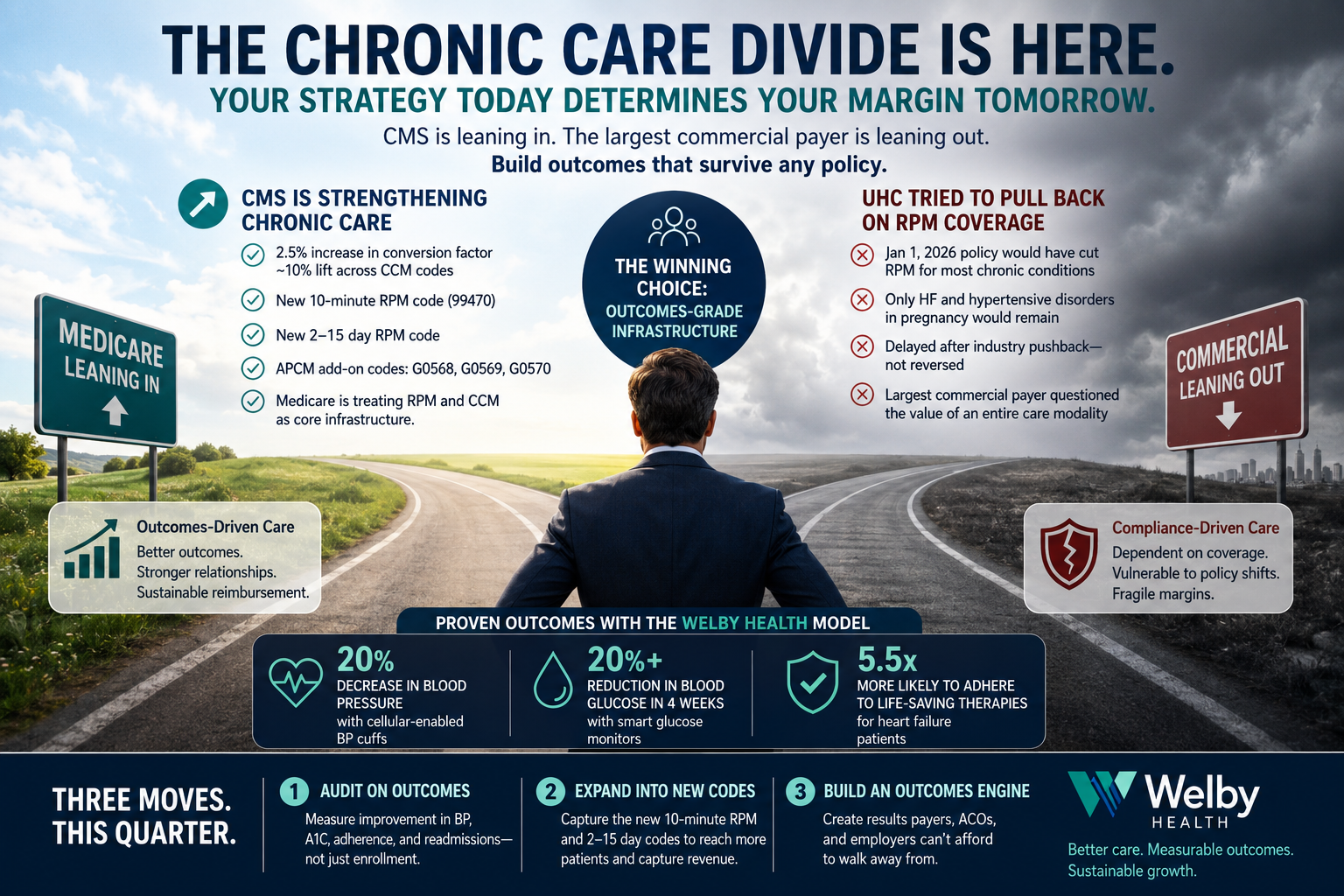
    CMS just delivered the strongest pro RPM and CCM rule in five years, including a roughly 10 percent reimbursement lift, a new 10-minute RPM code, and a 2 to 15-day measurement code that opens up patient populations that were previously unreachable. In the same window, UnitedHealthcare announced and then postponed a January 2026 rollback that would have stripped RPM coverage.
    May 21, 2026

    The Payer Map Just Split. Where Health Systems Plant Their Flag Will Define the Next Three Years.

    CMS just delivered the strongest pro RPM and CCM rule in five years, including a roughly 10 percent reimbursement lift, a new 10-minute RPM code, and a 2 to 15-day measurement code that opens up patient populations that were previously unreachable. In the same window, UnitedHealthcare announced and then postponed a January 2026 rollback that would have stripped RPM coverage.
    The 2026 CMS Final Rule raised chronic care management reimbursement by roughly 10%, created a new 10-minute RPM code (CPT 99470), added APCM behavioral health add-on codes, and incorporated AI-augmented services into CPT for the first time. In parallel, the OIG launched a multi-year CCM eligibility audit, and the healthcare workforce is projected to shrink by 4 million workers by year end.
    May 11, 2026

    CMS Just Sweetened Chronic Care Reimbursement. The Workforce Crisis Will Decide Who Cashes In.

    The 2026 CMS Final Rule raised chronic care management reimbursement by roughly 10%, created a new 10-minute RPM code (CPT 99470), added APCM behavioral health add-on codes, and incorporated AI-augmented services into CPT for the first time. In parallel, the OIG launched a multi-year CCM eligibility audit, and the healthcare workforce is projected to shrink by 4 million workers by year end.
    Healthcare is heading into a structural workforce shortfall that recruiting will not solve. HRSA projects a shortage of nearly 700,000 physicians and nurses by 2037, while 55 percent of healthcare employees plan to job-search in 2026. The only realistic path forward is extending the capacity of the clinicians you already have through AI.
    May 9, 2026

    The Nursing Math Health Systems Don't Want to Do

    Healthcare is heading into a structural workforce shortfall that recruiting will not solve. HRSA projects a shortage of nearly 700,000 physicians and nurses by 2037, while 55 percent of healthcare employees plan to job-search in 2026. The only realistic path forward is extending the capacity of the clinicians you already have through AI.
    Nurses Week 2026 runs May 6 to 12, with the ANA's theme The Power of Nurses anchoring the week. The data tells a harder story behind the celebration: more than half of U.S. healthcare workers plan to switch jobs in 2026, 41.5 percent of departing nurses cite burnout as the primary cause, and turnover-driven costs reach an estimated $4.6 billion annually with roughly $52,350 to replace a single RN
    May 5, 2026

    Nurses Don't Need Another Pizza Party. They Need a Better Operating Model.

    Nurses Week 2026 runs May 6 to 12, with the ANA's theme The Power of Nurses anchoring the week. The data tells a harder story behind the celebration: more than half of U.S. healthcare workers plan to switch jobs in 2026, 41.5 percent of departing nurses cite burnout as the primary cause, and turnover-driven costs reach an estimated $4.6 billion annually with roughly $52,350 to replace a single RN
    The remote patient monitoring market is projected to reach $88.3 billion by 2035, but only 3 percent of health systems have deployed agentic AI in live clinical workflows. The gap between AI hype and real-world deployment is where most health systems will lose the next decade. Agentic AI alone does not solve chronic care, because the bottleneck is operating model, not algorithm.
    May 1, 2026

    Healthcare's $88 Billion AI Bet Will Fail Without Nurses

    The remote patient monitoring market is projected to reach $88.3 billion by 2035, but only 3 percent of health systems have deployed agentic AI in live clinical workflows. The gap between AI hype and real-world deployment is where most health systems will lose the next decade. Agentic AI alone does not solve chronic care, because the bottleneck is operating model, not algorithm.
    CMS approved more than 150 organizations on April 13 for the ACCESS Model, a 10-year outcome-aligned chronic care payment program launching July 5. Combined with the bipartisan Chronic Care Management Improvement Act introduced April 14 (which would eliminate beneficiary coinsurance on CCM) and the new RPM CPT codes that took effect January 1, the economics of chronic care in Original Medicare.
    April 28, 2026

    CMS Just Placed 150 Bets on Tech-Enabled Chronic Care. Most Health System CEOs Missed the Signal.

    CMS approved more than 150 organizations on April 13 for the ACCESS Model, a 10-year outcome-aligned chronic care payment program launching July 5. Combined with the bipartisan Chronic Care Management Improvement Act introduced April 14 (which would eliminate beneficiary coinsurance on CCM) and the new RPM CPT codes that took effect January 1, the economics of chronic care in Original Medicare.
    Healthcare's AI investment is accelerating, but the dollars are concentrated in administrative and documentation use cases that will commoditize within eighteen months. The AI deployments producing real clinical and financial returns are the ones that shorten time-to-intervention rather than time-to-bill, including bedside predictive monitoring, continuous remote monitoring, and clinical workflow
    April 28, 2026

    Healthcare's AI Money Is Going Big. The Outcomes Math Is Lagging.

    Healthcare's AI investment is accelerating, but the dollars are concentrated in administrative and documentation use cases that will commoditize within eighteen months. The AI deployments producing real clinical and financial returns are the ones that shorten time-to-intervention rather than time-to-bill, including bedside predictive monitoring, continuous remote monitoring, and clinical workflow
    Two federal actions in the past week, the launch of CMS's ACCESS Model with 150+ accepted participants and the introduction of the bipartisan Chronic Care Management Improvement Act of 2026, just rewrote the economics of chronic care. ACCESS pays providers for outcomes over a ten-year horizon. The new bill would eliminate the 20 percent patient cost-share that has suppressed CCM enrollment for a d
    April 21, 2026

    The Floor Just Moved: Two Federal Actions in One Week That Should Reshape Every Chronic Care Strategy

    Two federal actions in the past week, the launch of CMS's ACCESS Model with 150+ accepted participants and the introduction of the bipartisan Chronic Care Management Improvement Act of 2026, just rewrote the economics of chronic care. ACCESS pays providers for outcomes over a ten-year horizon. The new bill would eliminate the 20 percent patient cost-share that has suppressed CCM enrollment for a d
    UnitedHealthcare attempted to strip RPM coverage for chronic hypertension, diabetes, and COPD, limiting it to heart failure and gestational hypertension only. They delayed after industry backlash but still plan to enforce the policy in 2026. The evidence directly contradicts their "no evidence" claim: large studies show RPM reduces blood pressure by 7-17 mmHg and cuts uncontrolled hypertension rat
    April 16, 2026

    The Largest Commercial Payer Just Tried to Kill RPM for Chronic Disease. The Evidence Says They're Wrong.

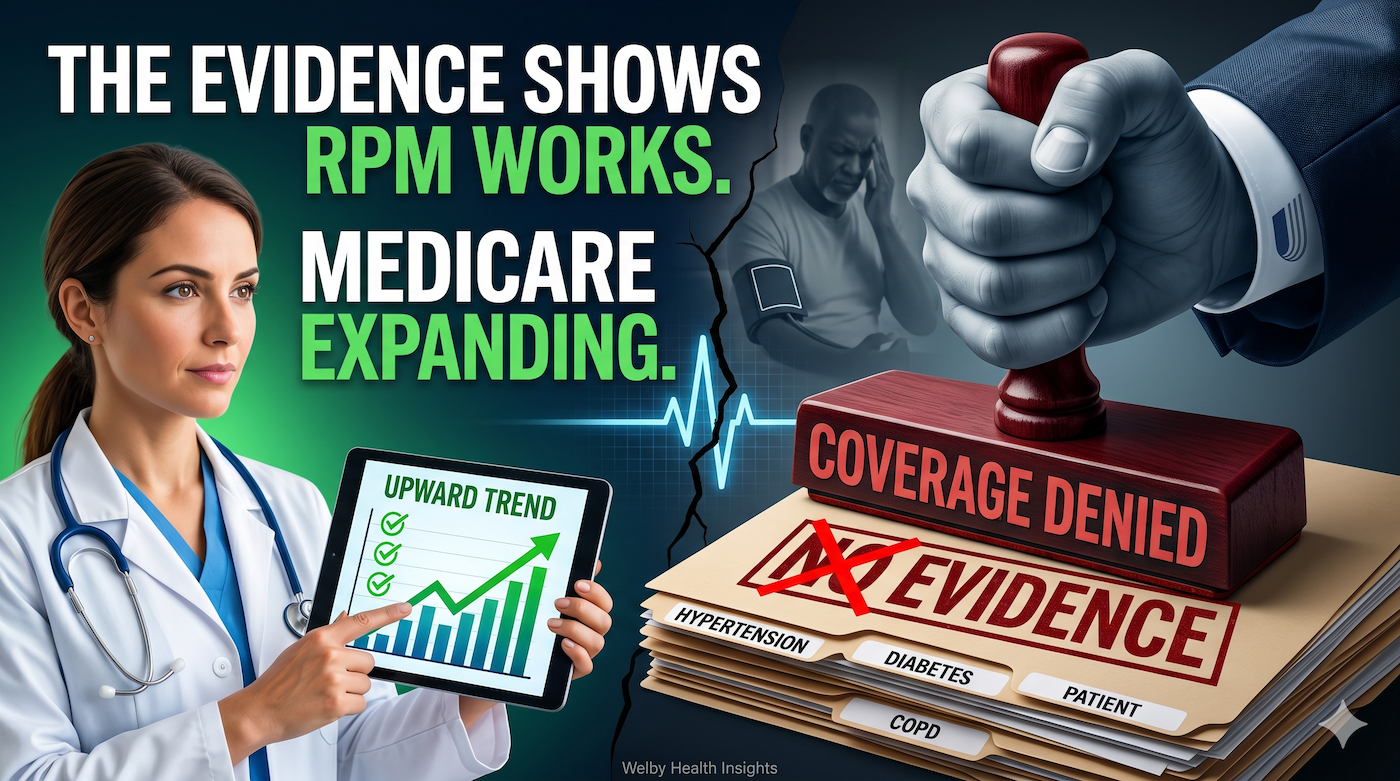
    UnitedHealthcare attempted to strip RPM coverage for chronic hypertension, diabetes, and COPD, limiting it to heart failure and gestational hypertension only. They delayed after industry backlash but still plan to enforce the policy in 2026. The evidence directly contradicts their "no evidence" claim: large studies show RPM reduces blood pressure by 7-17 mmHg and cuts uncontrolled hypertension rat
    CMS's 2026 Final Rule lowered the RPM threshold from 16 days and 20 minutes to as few as 2 days and 10 minutes, raised CCM reimbursement roughly 10 percent, and made the Ambulatory Specialty Model for heart failure and low back pain mandatory.
    April 13, 2026

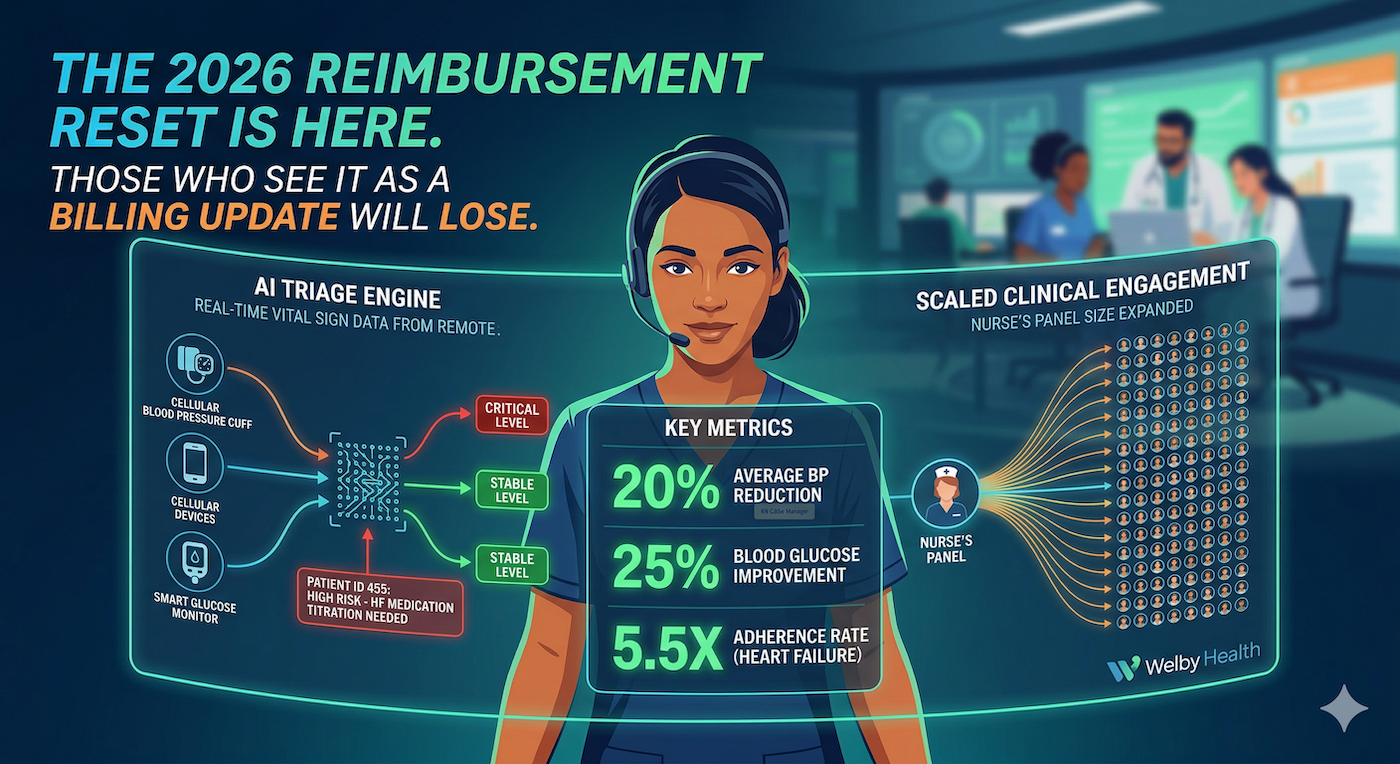
    The 2026 Reimbursement Reset Is Here. Health Systems That Treat It As A Billing Update Will Lose.

    CMS's 2026 Final Rule lowered the RPM threshold from 16 days and 20 minutes to as few as 2 days and 10 minutes, raised CCM reimbursement roughly 10 percent, and made the Ambulatory Specialty Model for heart failure and low back pain mandatory.
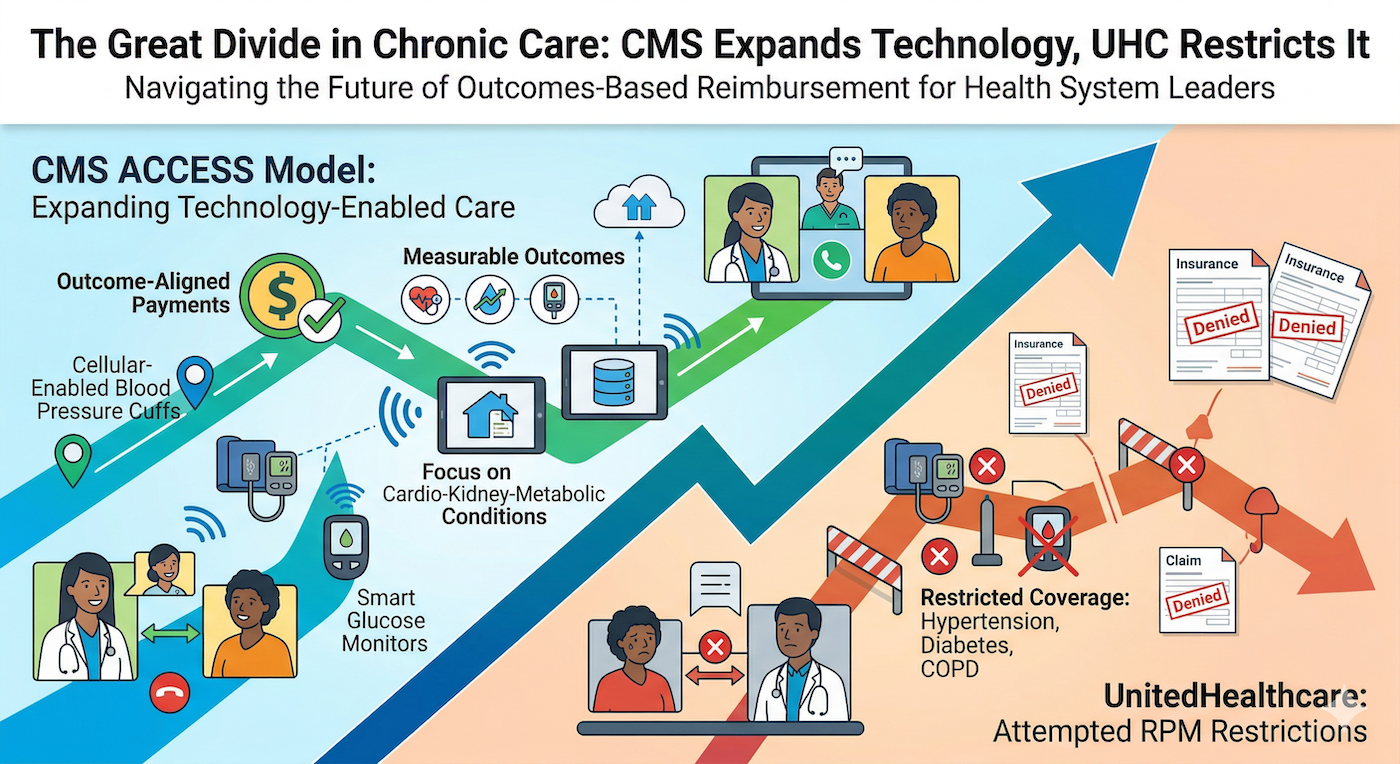
    CMS is launching the ACCESS model in July 2026, a 10-year initiative that ties chronic care payments directly to measurable patient outcomes rather than time-based billing. At the same time, UnitedHealthcare tried to gut RPM coverage for chronic hypertension, diabetes, and COPD, only to postpone after industry backlash. These opposing moves create a defining moment for health system leaders.
    April 9, 2026

    The Two Futures of Chronic Care: CMS Is Betting on Outcomes While the Largest Payer Retreats

    CMS is launching the ACCESS model in July 2026, a 10-year initiative that ties chronic care payments directly to measurable patient outcomes rather than time-based billing. At the same time, UnitedHealthcare tried to gut RPM coverage for chronic hypertension, diabetes, and COPD, only to postpone after industry backlash. These opposing moves create a defining moment for health system leaders.
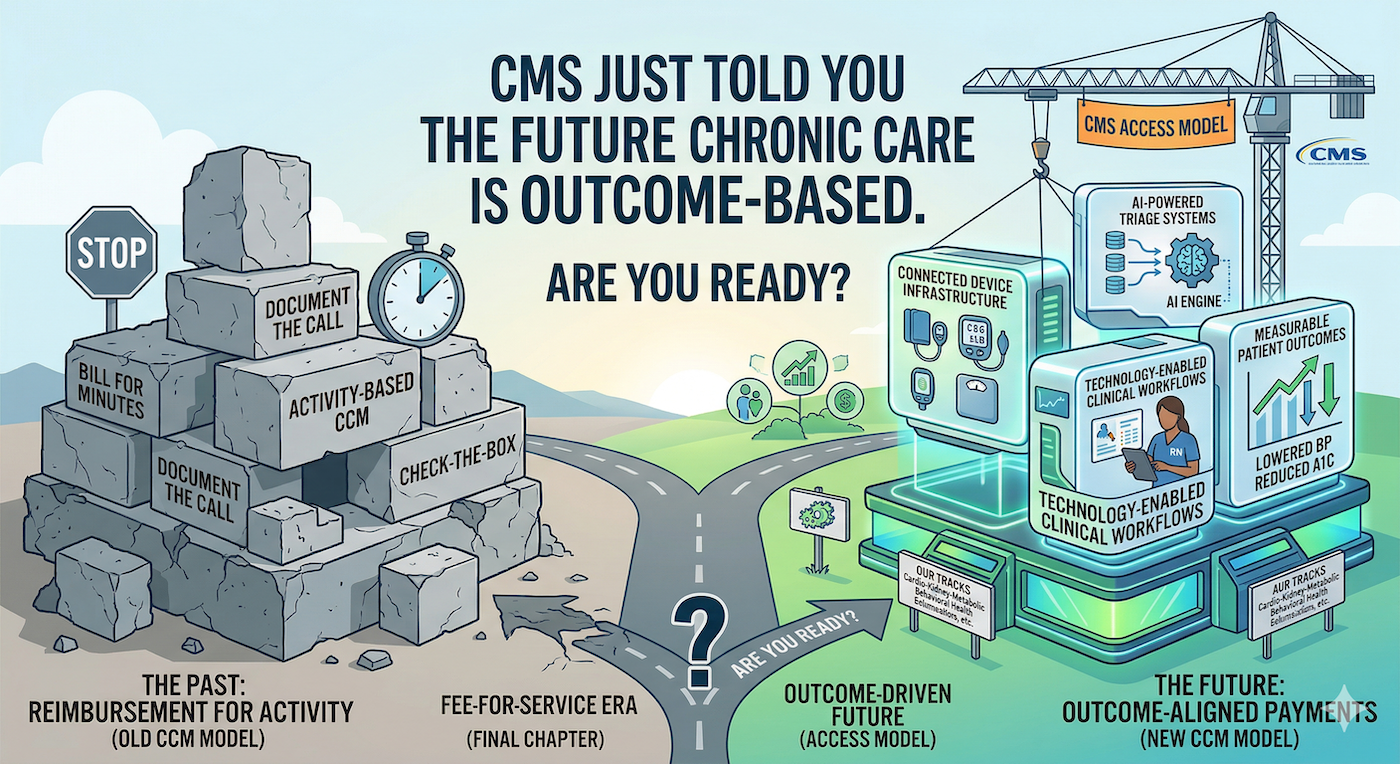
    CMS's new ACCESS model, launching July 5, 2026, introduces outcome-aligned payments for technology-enabled chronic care management across conditions like hypertension, diabetes, chronic pain, and depression. This is a 10-year model that ties full reimbursement to measurable patient health outcomes, not just documented activities.
    April 6, 2026

    CMS Just Told You the Future of Chronic Care Is Outcome-Based. Are You Ready?

    CMS's new ACCESS model, launching July 5, 2026, introduces outcome-aligned payments for technology-enabled chronic care management across conditions like hypertension, diabetes, chronic pain, and depression. This is a 10-year model that ties full reimbursement to measurable patient health outcomes, not just documented activities.
    The U.S. is short roughly 84,000 physicians and 250,000 RNs, and traditional hiring strategies cannot close that gap. AI adoption in healthcare has nearly doubled since 2024, but most organizations are deploying it without redesigning workflows around their clinical teams.
    April 2, 2026

    You Can't Hire Your Way Out of the Healthcare Workforce Crisis. The Math Doesn't Work.

    The U.S. is short roughly 84,000 physicians and 250,000 RNs, and traditional hiring strategies cannot close that gap. AI adoption in healthcare has nearly doubled since 2024, but most organizations are deploying it without redesigning workflows around their clinical teams.
    American healthcare is failing its doctors, not the other way around. I started Welby Health because physicians deserve a system built around keeping people healthy, not one that burns them out treating preventable crises. On National Doctors' Day, let's honor the people and fix the model.
    March 30, 2026

    The System Is Broken. The Doctors Aren't.

    American healthcare is failing its doctors, not the other way around. I started Welby Health because physicians deserve a system built around keeping people healthy, not one that burns them out treating preventable crises. On National Doctors' Day, let's honor the people and fix the model.
    UnitedHealthcare is pulling RPM coverage for hypertension, diabetes, and COPD, calling it "unproven." At the same time, CMS is launching ACCESS -- a 10-year payment model that ties Medicare Part B dollars directly to technology-enabled chronic care outcomes -- and the FDA's TEMPO pilot is fast-tracking digital health devices to support it. The evidence overwhelmingly supports RPM.
    March 30, 2026

    The Largest Payer in America Just Declared RPM "Unproven." CMS and the FDA Disagree. Here's What That Means for Your Organization.

    UnitedHealthcare is pulling RPM coverage for hypertension, diabetes, and COPD, calling it "unproven." At the same time, CMS is launching ACCESS -- a 10-year payment model that ties Medicare Part B dollars directly to technology-enabled chronic care outcomes -- and the FDA's TEMPO pilot is fast-tracking digital health devices to support it. The evidence overwhelmingly supports RPM.