

Becker's ran a snapshot this week. Around 50 US health systems are now running clinical AI at enterprise scale. CommonSpirit alone reportedly sits on something like 250 active AI tools across its hospitals and claims north of $100 million in annual value. Big numbers. Big press releases. Every system wants to be on the list, and most of the people on those panels sound like they already won.
Then read the audit. The Stanford-Harvard ARISE team looked at roughly 1,200 FDA-cleared AI medical devices and found that fewer than 15% are actually used routinely in the hospitals that paid for them. In the ICU it drops below 2%. And the models that do run make somewhere between 12 and 15 severe errors per 100 cases on the best systems, and the worst ones sail past 40. I'd verify those exact figures before you quote them in a board deck, but the direction is not up for debate.
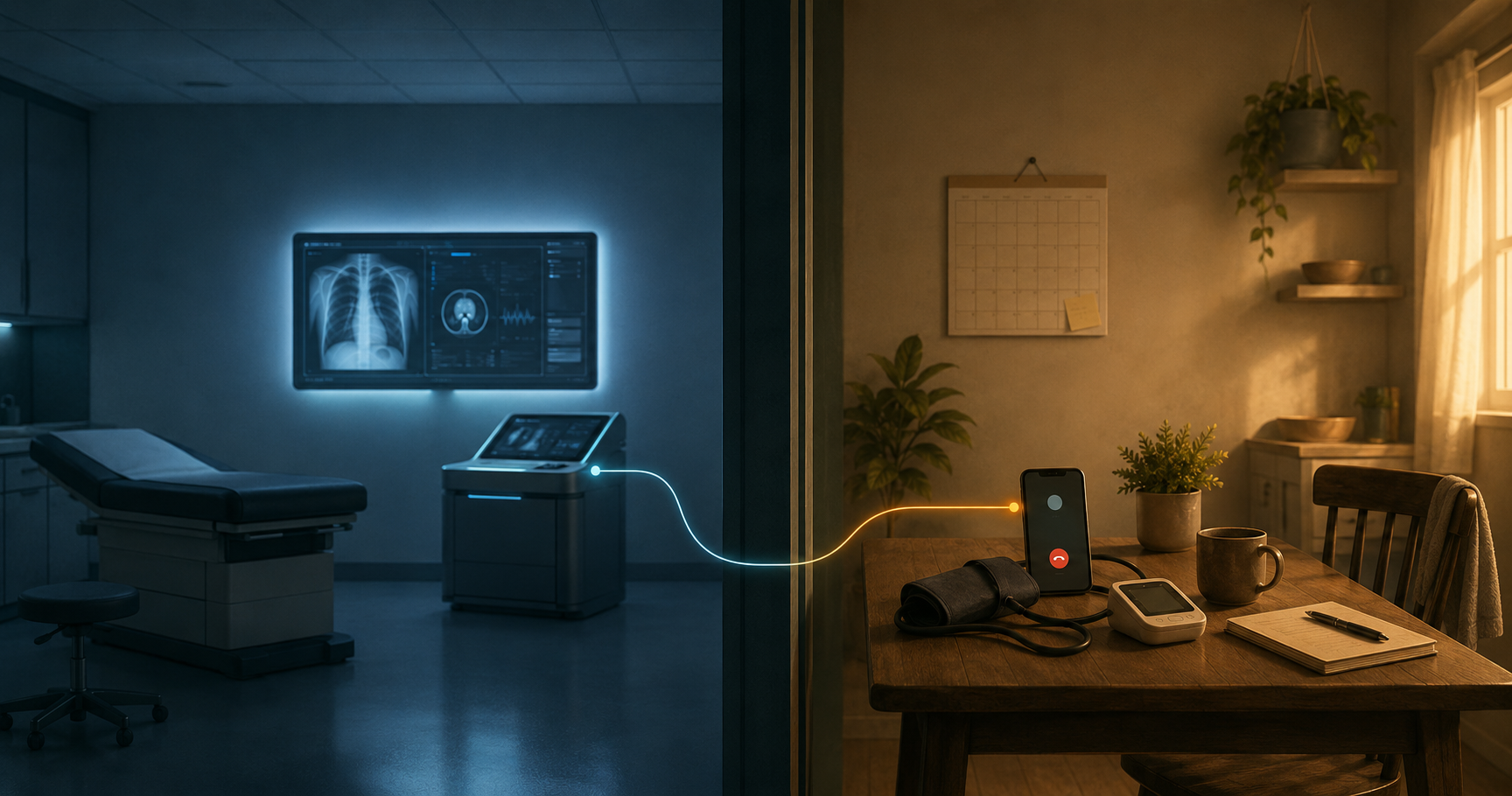
Here's the thing nobody on the enterprise-AI stage wants to say. We don't have a clinical AI quality problem. We have a placement problem. The industry keeps shoving AI into the exam room and the bedside, the two rooms where it gets used the least and hurts the most when it's wrong, and it keeps ignoring the room where AI is safe and already pays for itself.
I'll say it plainly. If your AI strategy this year is about helping a physician diagnose faster or read a scan or flag sepsis at the bedside, you bought the hard version of the problem. That work is real and someday it matters. But it sits on top of a clinician who is legally and morally required to second-guess the machine every single time. The Wolters Kluwer numbers say roughly 77% of clinicians already validate AI output against a trusted source before they act on it. Good. They should. But think about what that means for your ROI. You spent enterprise money on a tool whose entire job is to be checked by the most expensive person in the building. You didn't remove work. You added a verification step and called it innovation.
That's why those tools sit on the shelf. A doctor who has to re-confirm everything the model says will eventually stop opening the model. Workflow friction, drift, liability, plain distrust. The audit names all of it. None of that is a bug you patch in the next release. It's the structural reality of putting probabilistic software next to a clinical decision that a human owns.
Now look at the other room.
Most of what makes a chronic-care patient better or worse has nothing to do with the 12 minutes they spend in front of a doctor. It happens in the 525,588 other minutes of the year. Did they pick up the prescription. Did anyone call when the blood pressure cuff readings drifted up for a week. Did they get scheduled, reminded, re-engaged when they ghosted. Did the right patient get in front of the right nurse before the small thing became an admission. That work is enormous, it's boring, and almost nobody staffs it well because licensed clinicians are too expensive and too scarce to spend their day dialing phones.
That is exactly the work AI should be doing. And the math is completely different there. When an AI agent calls 400 hypertension patients to book a check-in and gets one wrong, the failure mode is a bad appointment time. A human catches it in two seconds. When an AI flags the wrong thing at the bedside, the failure mode is a dead patient and a lawsuit. Same technology, wildly different blast radius. One belongs in production today. One needs a decade and a human with a license standing guard.
We've run this play at Welby and it works. We hold a hard line that AI never makes a clinical decision, full stop, human in the loop for the foreseeable future. So we point it at the part of the workday that doesn't need a clinical decision at all. Outreach. Consent. Scheduling. Reminders. Risk profiling before a nurse ever picks up. The patient still talks to a person for anything clinical. But the machine clears the runway so the nurse spends her hour on care instead of voicemail. That's not a moonshot. It's just putting the tool where it can't kill anybody and where the savings are immediate.
The dirty secret is the boring version is also the profitable version. Enterprise diagnostic AI is a multi-year integration with an uncertain payoff and a clinician bottleneck baked in. Between-visit engagement AI pays back this year because it directly moves the two numbers every health system already cares about, how many eligible patients you actually touch and how many of them stay engaged. You don't need a Harvard audit to model that.
So what do you do Monday morning.
Pull your AI inventory and sort every tool into one bucket or the other. Does this thing touch a clinical decision, yes or no. The "yes" pile is your science project. Govern it, pilot it, measure it honestly, and stop pretending the procurement was a win until somebody actually uses it. The audit says 85% of your "yes" pile is shelfware right now, so go confirm whether yours is the exception or the rule. I'm betting rule.
The "no" pile is where you move money this quarter. Find the highest-volume administrative and outreach work eating your clinical staff's time and put an agent on it, with a human reviewing the edge cases. Measure it in weeks, not years. If it doesn't lift patient touches or engagement inside a quarter, kill it and try the next one.
And quit grading your AI program by how many tools you bought. CommonSpirit's 250 tools is a fun headline and a terrible metric. Count the work that actually got done by a machine and stayed done. Almost everybody who counts that way discovers their wins are sitting in the boring room they were too proud to invest in.
The hospitals winning with AI in 2026 won't be the ones with the most clinical models. They'll be the ones who were honest about where the technology is allowed to fail.
